Remembering a tragedy
We must honour our heroes, but not those who sent them to die
111 years ago today, Australian and New Zealand forces landed at what is now Anzac Cove in the Gallipoli Peninsula, suffering heavy losses as they attempted to storm entrenched Turkish positions. Eight months later, having failed to dislodge the Turks, despite the loss of more than 10 000 killed and 20 000 wounded, the Anzacs withdrew, managing to conceal the retreat and evacuate their positions with minimal casualties. This much, along with individual stories of heroism and suffering, is known to just about every Australian.
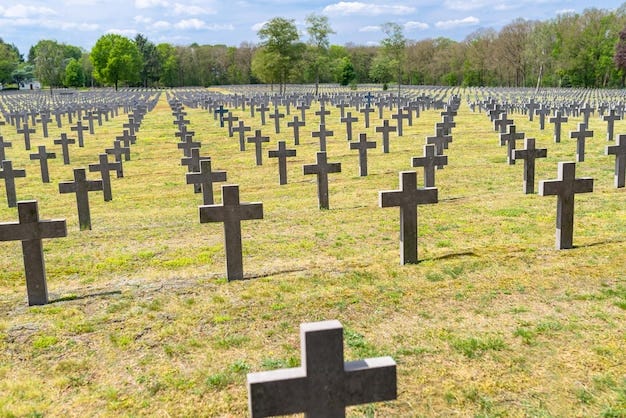
But there are many important facts that are less well known, and many questions that are rarely asked
* The ANZACs were only a small part of the forces on the Allied side. British, Irish and French troops also fought, suffering many more casualties. Overall, the campaign cost at least 100 000 lives, with the Allies and the Turks losing about equal numbers
* The attack (which followed a failed naval assault) coincided with the beginning of the Armenian genocide in which the Ottoman government killed somewhere around 1,000,000 Armenian Christians.
* Although the Gallipoli campaign failed, the war objective of dismembering the Ottoman empire was ultimately achieved in large measure, leading to the creation of Iraq, Syria and most of the other states collectively known today as the Middle East. The overlapping wars in the Middle East is embroiled today can be traced to this partition
There is a natural human tendency to look for some good outcome from such horrific carnage. In the case of Gallipoli reflected in Australian and Turkish national foundation myths in which both the Anzacs and their Turkish opponents were fighting for their respective nations’ freedom. But the reality is that there was nothing good about the Great War, and that nothing came from it except the seeds of even more war and genocide.
Finally, why was Australia at war with Turkey and what were the Anzacs doing in Gallipoli? The answer is that in 1913 the Ottoman government wanted an alliance with Britain and France, but was turned down . Czarist Russia, also allied with Britain and France, offered terms that amounted to a protectorate. It was the desire to keep Russia in the alliance (which turned out disastrously with the Bolshevik revolution) that motivated the French rejection. With a slightly different roll of the historical dice, the Anzacs might have been defending Turkey against Russia.
A crucial cause of the War, and the background for the Sarajevo assassination that formed the pretext on the German/Austrian side was the decline of the Ottoman empire and the attempts by the other European empires to carve it up for their own benefit. When the War broke out, the Turkish government judged that Russia was the biggest threat, and therefore sided with the Germans. It was the fear that the Armenian Christians might support Russia (along with the usual role of plain evil) that motivated the genocide.
The Turkish judgement was accurate, or perhaps self-fulfilling. In a secret agreement made in early March 1915 (and published by the Bolsheviks after the Czarist government was overthrown in Russia), the British, French and Russian governments agreed to partition the Ottoman empire among themselves, leaving at most a rump Turkish state in existence. The assault on the Dardanelles was an attempt by the British and French to cut off the European part of Turkey (promised to the Russians) and open up a route to provide military supplies to Russia.
The heroism and suffering of those of all nations who fought and died at Gallipoli should never be forgotten. But the campaign had nothing to do with freedom, on either side. One brutal empire was trying to preserve its existence against rival empires determined to get the greatest possible benefit out of its collapse.
When we say “We Shall Remember Them”, we should remember that our best service to the memory of the Anzacs is to resist calls for war.
Follow me on Bluesky or Mastodon
Read my comic book presentation of The Perils of Privatisation. Paid subscribers get a free physical copy.
Read my newsletter
Yes. Thank you.
“Stranger, go tell the Spartans we died here obedient to their commands.”
— Inscription at Thermopylae
Linger not, stranger. Shed no tear.
Go back to those who sent us here.
We are the young they drafted out
To wars their folly brought about.
Go tell those old men, safe in bed,
We took their orders and are dead.
~by A.D. Hope, Inscription for a War
Thanks John. Standing there this morning listening to the last post as an ex-serviceman who has struggled with this debate in the past, I am finally content to have finally come full circle and now clearly understand whom is to blame for these tragedies.
It reaffirms my desire to maximise every conversation I can for the remainder of my days to hold to account those in power and ensure to the best of my ability that those who now wear uniform never have to commit to offensive action ever again.