One big grift
The US financial system is a spectacular refutation of the Efficient Markets Hypothesis
The SpaceX IPO, valuing a motley collection of dubious business at over a trillion dollars, marks the abandonment of the Efficient (financial) Markets Hypothesis, one of the zombie ideas I criticised in the wake of the Global Financial Crisis. Not only do financial markets fail in the task of valuing assets accurately, but the institutional structures that are supposed to make them work have given up trying.
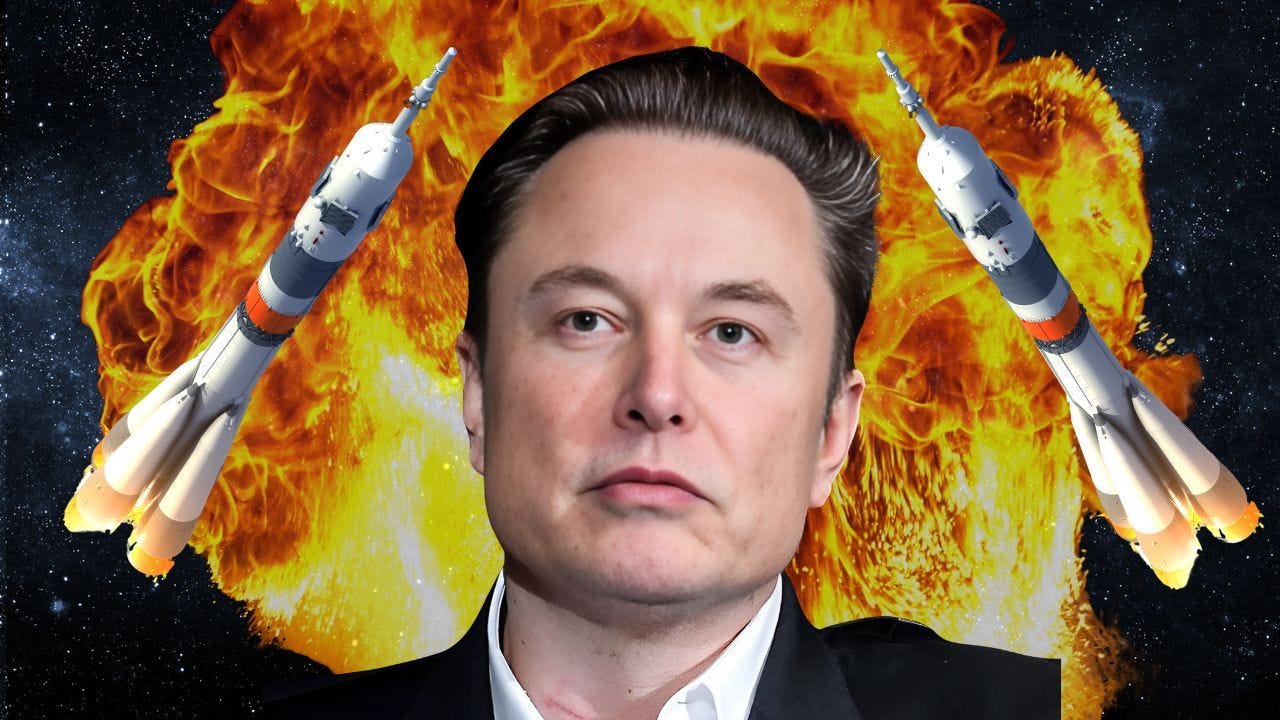
Source: digit.in
This was prefigured by the rise of Bitcoin and other forms of crypto. Revealingly, no one any longer uses the term “cryptocurrency” - these assets are never used as currency in ordinary transactions, and even their illicit uses seem to have faded. Rather, Bitcoin is valuable solely because it is valued. As I pointed out back in 2018, (free from paywall here) once this logic is accepted, it can be applied to financial assets more generally, and particularly to stock markets.
For quite a while, financial institutions like Goldman Sachs held out against crypto. But the rewards became too great to ignore and the crypto industry too politically powerful. Crypto moved from the netherworld it once inhabited to the respectability of exchange traded funds.
The extension to stock markets has been happening for a while, with meme stocks like GameStop, and then with massive valuations of AI stocks. But meme stocks are a sideshow, and the future of AI is unclear enough that it’s possible to make a case.
It’s only with SpaceX that we can see the complete abandonment of any pretence at rationality. In the case of SpaceX, I was struck by Dave Karpf’s observation that Musk’s wealth in 2020 was “only” $24 billion. Everything of value in his career (Tesla cars, batteries, Starlink) had been achieved by then, and everything he has touched since then has been a disaster (Xitter, Cybertruck, robotaxis, Starship). Yet his wealth has multiplied 50 times over).
In support of the IPO, Goldman Sachs has put its name to the claim that the company will grow 100 times over by 2030. This is patently absurd. Nothing in Musk’s ragbag of assets has this kind of potential.
Starlink, the pre-2020 bit of the business, has been successful enough, but satellite-based Internet is never going to be huge. And there is plenty of downside risk, as Europe and China try to develop alternatives. Given that Starlink’s satellites have a life of only five years, the business could well be in sharp decline by 2030. Starship, by contrast, seems unlikely to succeed in getting humans to the Moon, and won’t make much money even if it does. Talk of Mars, data centres etc is a joke.
The AI part of the business is barely even a joke. Not only is Grok an also-ran in the LLM stakes, but Musks’ promotion of racism, terrorist riots and sex crimes leaves him, and the company open to huge liability, at least in Europe, where Trump can’t protect him.
The comprehensive corruption of the financial system confirms me in the view that the USA is one big grift. Not just the financial system, but politically and militarily as well. But that’s a topic for another day.
Follow me on Bluesky or Mastodon
Read my comic book presentation of The Perils of Privatisation. Paid subscribers get a free physical copy.
Read my newsletter
Financial markets are dominated by a large and growing ocean of money, sloshing around trying to find the highest returns just as water tries to find the lowest point. This is partly because of growing wealth inequality meaning the rich have more to invest than ever, and partly because of the financialisation of everything, which means pensions and sovereign wealth are now tied up in investment funds.
A rational(ish) market is not possible unless there is a way for investors to opt out by saying, "I can't see any prospect of capital gains. I'm out of here." This is the role played by interest-bearing investments like savings and bonds, but with interest rates having been so low for so long, there is no good reason to invest in interest-bearing investments. Instead, everyone pursues capital gains from shares, gold, crypto, collectibles and who knows what else.
As a renter saving for a home deposit, I'm currently earning 7.43% on some of my savings because I'm taking advantage of the the first home super saver scheme. Imagine if interest rates like this were available to everyone who is a net saver. Share prices would plummet as people rushed for guaranteed returns, as would the crypto market and the price of gold and homes.
Central banks have been pushing on a rope for years now, trying to stimulate economies using the only tool they have, while governments have failed to provide adequate stimulus. This started after the GFC in Australia and after the Dot Com bubble in the US.
One solution would be for the RBA to have a legislated floor on the cash rate of 4% or 5%. Any cash rate below this is irresponsible and ineffective at stimulating the economy, anyway. Ruling it out would force the responsibility for economic stimulus onto the government, where it belongs and help delay and ameliorate the impact of financial crashes.
I just shorted one share of SpaceX. Hope I can make the margin calls! :-)